
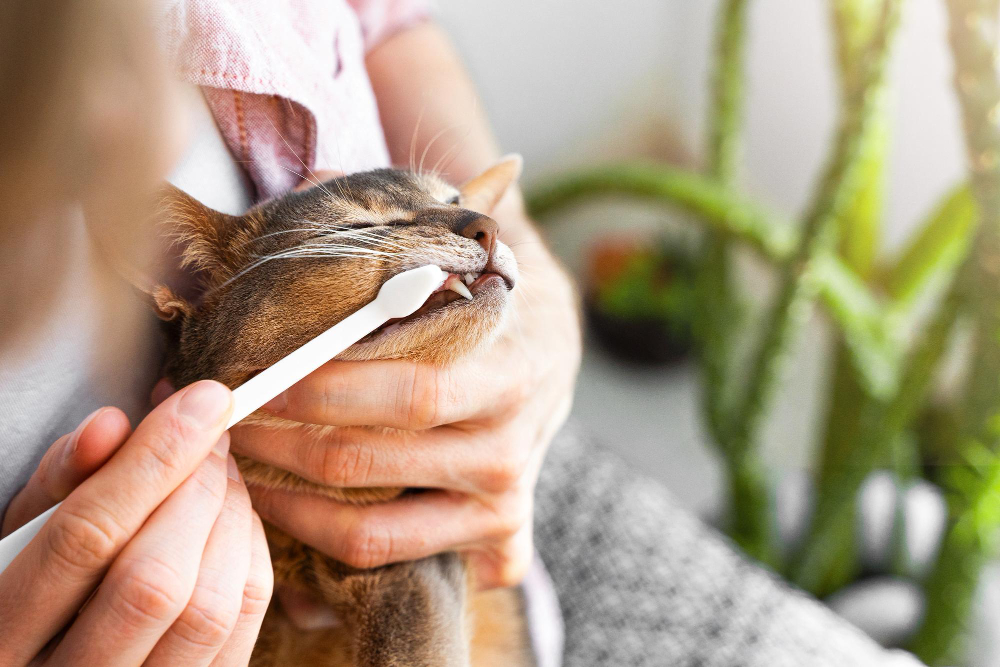
Dental problems often start quietly in pets. They show few clear signs until serious harm happens. Many dogs and cats may have dental disease without owners seeing early signs. Catching the first signs of dental issues in pets allows for quicker care, helping to prevent pain, tooth loss, and even problems with vital organs. Early treatment also avoids complex and costly care later. At ASL Vets, we work to find these problems early with expert dental checks. This gives pets the best chance for long-term mouth and body health.
What Are Common Symptoms of Dental Problems in Pets?
Dental problems in pets often start without clear signs. Spotting changes early helps prevent serious health issues.
- Bad Breath (Halitosis): Bad breath is one of the first signs of dental trouble. The smell comes from bacteria on the teeth and gums.
- Tartar Build-Up: Yellow or brown tartar forms along the gum line. This hard layer causes gum swelling and raises the risk of infection.
- Red, Swollen, or Bleeding Gums: Inflamed gums may bleed during eating or chewing. This signals gingivitis, which can progress to advanced gum disease if not treated.
- Excessive Drooling: Some pets drool more when their mouths hurt. The drool may contain traces of blood if the gums are damaged.
- Eating Difficulties: Pets may avoid hard food, drop food while chewing, or favour one side of the mouth. These behaviours suggest pain when eating.
- Pawing at the Mouth or Face: Frequent pawing or rubbing at the mouth can mean discomfort or pain from dental problems.
- Loose or Missing Teeth: Advanced dental disease may weaken the bone and gum support, causing teeth to loosen or fall out.
- Facial Swelling: Swelling near the jaw or cheeks often points to an abscess or severe infection beneath the gums.
- Behavioural Changes: Pets in pain may withdraw, become irritable, or lose interest in play. These changes often reflect ongoing dental discomfort.
Why Do Pets Hide Dental Pain?
Dental pain in pets often remains hidden because of natural behaviours and survival instincts. Understanding why pets conceal discomfort helps owners spot early warning signs.
Instinct to Mask Weakness
In the wild, showing pain made animals easy targets for predators. This instinct still exists in domestic pets. Even when in pain, many pets continue to eat, play, and act normally to avoid appearing weak.
Pain-Blocking Hormones
Pets may release hormones like adrenaline when they are in pain. These hormones can dull the sensation for a time, allowing pets to function while dental disease progresses unnoticed.
Gradual Onset of Pain
Dental disease usually develops slowly. Pets often adjust their habits as the pain grows:
- They may chew more slowly or on one side of the mouth.
- Some may drop food or avoid hard treats.
- Changes may appear small and easy to miss at first.
High Drive to Eat
Eating is a strong survival need. Even pets with severe dental disease often continue to eat despite the pain, making it seem as though everything is fine.
Subtle Behavioural Changes
Owners should look for small changes that may point to dental pain:
- Pawing at the mouth or rubbing the face.
- Increased drooling, sometimes with blood.
- Avoid touching near the mouth or face.
- Reduced playfulness or social withdrawal.
Early attention to these signs and routine dental checkups can help prevent severe problems and long-term pain.
When Should You Book a Dental Checkup for Your Pet?
Dental problems in pets often grow without clear signs. Quick checkups help catch issues before they cause serious harm.
Immediate Checkups for Warning Signs
Book a checkup right away if you see these early signs of dental problems:
- Bad breath: A strong smell from the mouth often means plaque, tartar, or infection.
- Red, swollen, or bleeding gums: Gum swelling may lead to gingivitis or gum disease.
- Changes in eating habits: Pets may drop food, chew on one side, or avoid hard food due to pain.
- Pawing at the mouth or face: Repeated pawing shows discomfort or pain.
- Excessive drooling or facial swelling: These may signal an infection or abscess needing quick care.
Routine Preventive Screenings
Even if no signs show, regular dental exams are still needed:
- Annual checkups: Most pets should have a dental check once a year to find hidden problems early.
- Every 6 months for high-risk breeds: Breeds like poodles and dachshunds are more likely to have gum issues and may need exams twice a year.
Early Checks for Puppies and Kittens
Young pets also need early dental checks to track growth:
- Bite alignment issues: Early exams find bite problems that may cause future dental issues.
- Retained baby teeth: Some baby teeth may not fall out, causing crowding or infection if not treated.
Regular dental visits help stop serious dental disease, lower long-term costs, and keep your pet happy and healthy.
FAQs about Signs of Dental Issues in Pets
How to know if a dog has teeth issues?
Look for bad breath, difficulty eating, swollen gums, or visible plaque and tartar.
How to tell if your cat has a dental issue?
Signs include bad breath, drooling, difficulty eating, pawing at the mouth, or red/swollen gums.
How will a dog behave if it has dental pain?
A dog with dental pain may avoid chewing, be more irritable, or have difficulty eating hard food.
What is Stage 1 dental disease in dogs?
Stage 1 dental disease involves gingivitis, where the gums are inflamed but no tooth damage has occurred yet.