
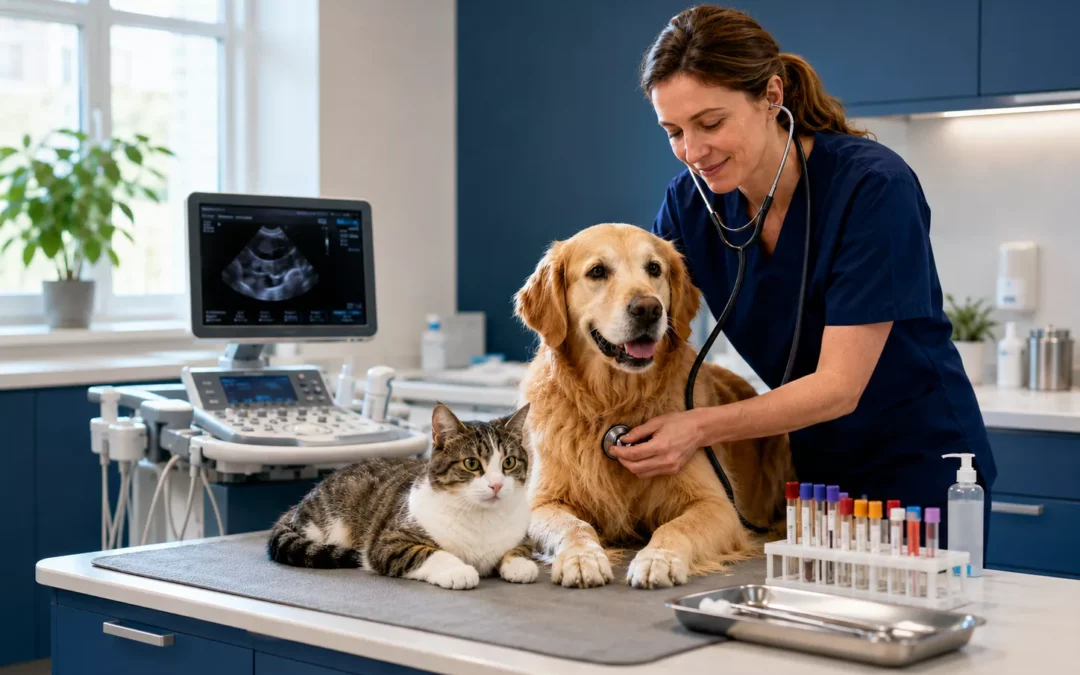
Veterinary diagnostic services play a central role in maintaining and protecting the health of dogs and cats by supporting accurate diagnosis, early detection, and effective treatment planning. These services encompass a wide range of laboratory tests, imaging procedures, and specialised screenings delivered by trained veterinary professionals and diagnostic laboratories. Diagnostic testing is required at key points throughout a pet’s life, including when symptoms appear, during routine wellness checks, at life-stage milestones, before surgery or anaesthesia, and when managing chronic or long-term conditions.
Core diagnostic tools such as blood tests, imaging (including X-rays and ultrasound scans), and laboratory sample analysis provide vital insight into organ function, immune health, and internal structures that cannot be assessed through physical examination alone. Advances in in-house laboratory facilities and digital diagnostics enable faster results, supporting timely clinical decisions and personalised care. Regular testing also allows veterinarians to establish individual baselines, monitor trends over time, and identify disease earlier, particularly in senior pets or those with ongoing medical conditions.
Diagnostic timelines vary depending on the testing method used, with in-house and digital services offering rapid results, while external laboratories may require longer processing times. Veterinarians select diagnostic tests by carefully balancing the need for accurate information with the pet’s safety and welfare, using professional judgement to guide treatment decisions. Prompt diagnostic appointments are essential when pets display concerning symptoms or sudden changes in health, ensuring early intervention, reduced risk, and improved outcomes for dogs and cats.
Table of Content
- What Are Veterinary Diagnostic Services?
- When Do Pets Need Diagnostic Testing?
- Blood Tests for Pets
- Pets X-Ray and Imaging Services
- Ultrasound Scans for Pets
- Laboratory Testing and Sample Analysis for Pets
- Diagnostic Timelines and Results for Pets
- Diagnostics for Pets Chronic and Long-Term Conditions
- Diagnostics Before Pet Surgery or Anaesthesia
- How Vets Choose the Right Diagnostic Tests?
- When Should You Book a Veterinary Diagnostic Appointment?
What Are Veterinary Diagnostic Services?
Veterinary Diagnostic Services are comprehensive services designed to provide a high level of support and advice to veterinary surgeons throughout the UK and abroad regarding the health of companion animal species. These specialised services are often provided by specialist pathologists, residents, and technicians based at dedicated diagnostic laboratories, utilising various methods to help uncover hidden conditions, confirm diagnoses, monitor chronic diseases, and guide targeted treatments.
The specific diagnostic procedures encompassed by Veterinary Diagnostic Services typically include:
- Laboratory tests
- Imaging procedures
- Cellular evaluations
- Condition-specific screenings
When Do Pets Need Diagnostic Testing?
Pets need diagnostic testing whenever they show symptoms, reach a new life stage, or require routine monitoring based on age and health status. These tests are essential for revealing hidden conditions, confirming clinical suspicions, and ensuring the pet receives the correct treatment in a timely manner.
Diagnostic testing is considered essential in the following non-routine situations:
- When the pet exhibits clinical symptoms of illness or changes in behaviour.
- Prior to receiving surgical care.
- Upon reaching a new life stage.
Regarding routine wellness testing, the frequency depends on the pet’s age and overall health. Wellness testing is beneficial for young pets, with six months of age being an ideal time to start (often coinciding with spay/neuter or vaccination visits) to identify congenital issues, detect early urinary tract abnormalities via urinalysis, and efficiently run heartworm and retrovirus tests for feline patients. Younger, healthy pets generally require annual checkups and testing, whereas senior pets or those managing chronic conditions may require diagnostic testing performed every six months.
Blood Tests for Pets
Blood tests for pets are a vital component of routine veterinary care, providing essential insights into their overall health and allowing for the detection of underlying conditions. These tests are critical whether the pet is showing signs of illness or needs a standard wellness check, as they help detect health issues before symptoms appear. This procedure is especially important as pets approach old age; even if they appear healthy, early detection through blood analysis gives the best chance to successfully fight off underlying conditions.
A pet blood test involves collecting a sample for analysis to learn information about the animal’s health that cannot be found otherwise. These essential insights cover organ function and the immune system. Specific laboratory tests typically include a Complete Blood Count (CBC) and blood chemistries that analyse the chemical components within the blood.
Pets X-Ray and Imaging Services
Pets X-ray and imaging services are crucial, advanced veterinary diagnostic tools that allow professionals to gain detailed information about a pet’s internal body structures, facilitating accurate diagnoses and effective treatment plans, even in complex cases. Animal radiology commonly utilises low levels of radiation to create X-ray images, providing veterinarians with valuable insights into what is happening inside the pet.
To ensure complete health care needs are met and to support exceptional care, veterinary clinics and specialists often offer a complete range of on-site diagnostic imaging services through state-of-the-art facilities, including:
- X-rays (Radiology)
- Ultrasounds
- Electrocardiographs
- Other advanced diagnostic and therapeutic services
Ultrasound Scans for Pets
Ultrasound scans for pets are a non-invasive veterinary diagnostic tool that utilises high-frequency sound waves to create real-time images of a pet’s internal organs and soft tissues, commonly used in dogs and cats. This imaging technique allows veterinarians to examine internal structures, view potential issues, and diagnose a wide range of conditions.
These high-quality scans are often offered as professional, mobile services, providing clear results in the comfort of the pet owner’s home. This option is particularly ideal for breeders or owners who wish to avoid a visit to a traditional clinic.
Laboratory Testing and Sample Analysis for Pets
Laboratory testing and sample analysis for pets, particularly routine blood tests, are a vital component of comprehensive veterinary care. These diagnostic services provide essential insights into a pet’s overall health, internal organ function, and immune system, which is crucial for detecting potential health issues early, often before noticeable symptoms appear. Whether a pet requires a routine wellness check or is showing signs of illness, these analyses capture a clear overview of their physiological status.Â
Many veterinary practices utilise state-of-the-art, in-house laboratory facilities to obtain rapid test results. Furthermore, high-quality diagnostic services ensure reliability by testing across multiple species, utilising defined reference ranges, implementing rigorous internal quality checks, and participating in external quality assurance schemes.
Diagnostic Timelines and Results for Pets
Diagnostic timelines and results for pets involve utilising various testing methods to gain a comprehensive understanding of the animal’s health, whether the testing is routine or addresses a specific problem. Test results provide the vet with a broader picture of how the pet’s body is functioning and are crucial for making decisions about the most helpful kind of treatment, allowing clinicians to track the pet’s response to therapy via repeating tests.
The interpretation of results relies on reference values, which are typically based on a mixed population of healthy dogs or cats within a geographic area. However, for individualised and precise care, clinicians are empowered by establishing a baseline or individual reference interval for each pet. Testing at regular intervals allows vets to monitor health trends and recognise potential diseases earlier, recognising that an individual pet’s normal’ may fall anywhere within or even outside the standard reference interval.
The timelines for receiving results differ significantly based on the laboratory process. Vets who send slides or other samples to an external laboratory typically have to wait 7–10 days for results. In contrast, advanced methods such as digital cytology allow veterinarians to provide real-time diagnosis, facilitating quicker treatment initiation and enabling pets to receive care sooner.
Diagnostics for Pets Chronic and Long-Term Conditions
Diagnostics for pets’ chronic and long-term conditions are crucial for continuous monitoring, timely intervention, and effective treatment adjustment. Many chronic illnesses, such as kidney disease and heart conditions, can lurk beneath the surface, showing no obvious symptoms until advanced stages. Modern veterinary diagnostic care, including comprehensive senior and geriatric profiles and routine canine and feline wellness testing, is designed to identify these subtle changes early, enabling personalised and timely care.
Routine diagnostics support long-term care by providing the necessary data, such as blood glucose levels, hormone panels, and imaging, to adjust treatments effectively and prevent flare-ups for chronic diseases, including:
- Diabetes
- Arthritis
- Thyroid disorders
- Kidney disease
- Heart conditions
Diagnostics Before Pet Surgery or Anaesthesia
The primary diagnostic procedure recommended before pet surgery or anaesthesia is the pre-anaesthetic blood screen or test. These tests are essential for ensuring the pet can safely undergo general anaesthesia, as they provide crucial health insights that extend beyond a standard physical examination. The results allow the veterinarian to assess the pet’s general health and suitability for the procedure, helping them tailor the anaesthetic protocol and make necessary adjustments, such as utilising supportive intravenous fluid therapy, to reduce the risk of complications during the procedure.
How Vets Choose the Right Diagnostic Tests?
Vets choose the right diagnostic tests by prioritising the pet’s welfare, leveraging their professional training and experience, and determining the necessity of the information needed to accurately diagnose and plan targeted treatment.
When a pet is sick, the veterinarian orders diagnostics, such as blood tests, imaging, or other specialised laboratory tests (which may be conducted in-clinic or sent out), primarily to find the cause of the illness and determine its seriousness. The results of these tests provide clear insights into the pet’s condition, enabling early identification, accurate decision-making, and personalised care adjustments. This process guides targeted therapy and supports proactive health planning, particularly for genetically predisposed breeds, ultimately improving treatment success.
However, the decision-making process involves balancing the need for information with the risks to the animal. Vets consider that some illnesses cannot be 100% confirmed by tests, and some tests might be painful or dangerous, especially for older pets. In situations where the vet has narrowed the possibilities down to two or three likely illnesses, and testing poses a high risk, they may recommend trying one treatment protocol at a time, observing the pet’s response to determine the underlying issue, thereby keeping the welfare of the animal as the priority.
When Should You Book a Veterinary Diagnostic Appointment?
When deciding when to schedule a veterinary diagnostic appointment, immediate attention is required when your pet’s condition is critical, as fast intervention can prevent suffering, stop deterioration, and even save their life. If you are unsure about the severity of your pet’s symptoms, you should seek immediate veterinary care, often requiring a visit to a 24-hour clinic if the situation cannot wait for normal surgery hours.
Specific situations and symptoms that warrant a prompt, same-day visit include:
- Persistent vomiting or diarrhoea.
- Difficulty breathing.
- Appearing unusually tired or unresponsive.
- Inability to urinate or defecate.
- Visible signs of pain, such as limping, whining, or reluctance to move.
- Sudden swelling or collapse.
- Known exposure to toxins.
Regardless of the specific symptom, you should not hesitate to contact your vet if you are worried about your pet’s health, as they are the best qualified experts to determine when their care and expertise are necessary.