
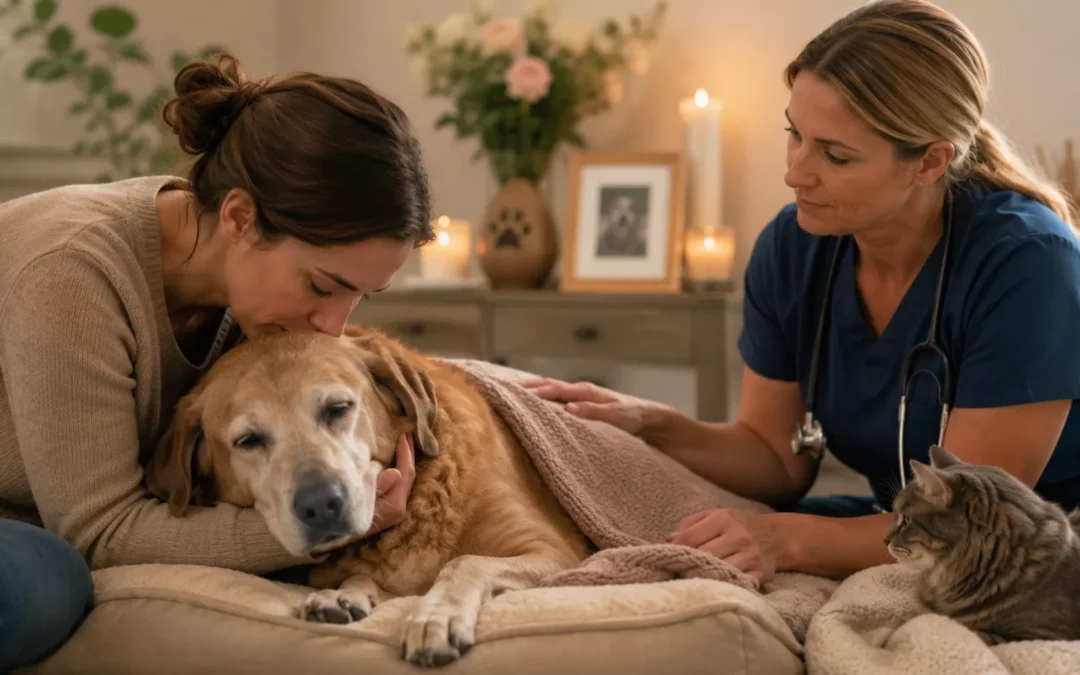
End-of-life and bereavement care for pets focuses on providing comfort, dignity, and compassionate support when a pet is living with a terminal or life-limiting condition. Veterinary end-of-life care, also known as pet hospice or palliative medicine, is recommended when curative treatment is no longer effective, and a pet’s quality of life is significantly declining. The central aim is to minimise distress, manage pain, and gently guide the pet through their final stage of life while supporting owners through complex emotional decisions.
Recognising when a pet is approaching the end of life is often emotionally challenging, as physical health, behaviour, and enjoyment of daily activities may change gradually or suddenly. Quality-of-life assessments help owners and veterinarians evaluate overall well-being by tracking mental and physical indicators over time. These structured tools support informed discussions about comfort, ongoing care, or when euthanasia may be the kindest option.
Supporting comfort at the end of life prioritises a calm, fear-free environment, with many families choosing in-home euthanasia to reduce stress and allow pets to pass peacefully in familiar surroundings. The euthanasia process itself is designed to be painless and gentle, with sedation often provided beforehand and veterinary reassurance throughout. Families may choose to be present and are guided on what to expect during and immediately after the procedure.
Decisions around end-of-life care also include choosing between at-home or clinic-based services, based on the pet’s temperament, family preferences, and practical circumstances. After a pet’s passing, aftercare options such as cremation or burial are considered, with advance planning encouraged to reduce emotional strain. Bereavement support services, including helplines and online resources, provide ongoing assistance to grieving owners, while guidance is also available to help surviving pets cope with the loss of a companion. Early conversations with a veterinarian ensure timely support, clarity around options, and compassionate guidance throughout the end-of-life and bereavement journey.
Table of Content
- What Is End-of-Life Care for Pets?
- Recognising When a Pet Is Approaching the End of Life
- Quality-of-Life Assessments
- Supporting Comfort at the End of Life
- Understanding Pet Euthanasia
- What to Expect During Euthanasia
- At-Home vs Clinic-Based End-of-Life Care
- Aftercare Options Following a Pet's Passing
- Supporting Grieving Pet Owners
- Helping Other Pets Cope With Loss
- When Should You Speak to a Vet About End-of-Life Care?
What Is End-of-Life Care for Pets?
End-of-Life Care for Pets, also known as pet hospice care or veterinary palliative medicine, is a specialised form of care designed to provide relief and comfort for animals suffering from terminal, incurable, or life-limiting illnesses when curative treatment attempts have ceased. This care is typically recommended by veterinarians when a pet is approaching its golden years or has been diagnosed with a condition causing a significant decline in its quality of life. The primary goal is to calmly guide the pet’s final experience, minimise any discomfort or distress, and support the pet parent during this difficult time. Options for managing the pet’s declining health include supervised care at home or, when necessary to end suffering, euthanasia; it is important to note that end-of-life care is distinct from long-term management of chronic diseases like diabetes or chronic kidney disease.
Recognising When a Pet Is Approaching The End of Life
Recognising when a pet is approaching the final stages of life is one of the most emotionally challenging responsibilities an owner can face, whether the decline is due to age, chronic illness, or terminal disease. This stage often brings significant changes in a pet’s physical health, behaviour, and overall quality of life. Knowing these signs and being prepared in advance can help ensure your pet’s last days are managed with love and care.
A critical step in evaluating this stage involves assessing the pet’s overall quality of life. As advised by veterinary professionals, owners should ask themselves two core questions: “Is my pet still enjoying their life?” and “Are the good days still outweighing the bad?” Owners should not delay consulting a vet out of worry; veterinary support can mean providing treatment options to improve the pet’s comfort and quality of life or discussing whether it is the appropriate time to consider euthanasia.
Quality-of-Life Assessments
Quality-of-Life Assessments are critical tools used to evaluate a pet’s overall well-being, taking into account all aspects of their mental and physical state. Because quality of life is not measured by just one single factor but rather the totality of the pet’s mental and physical well-being, the measurement process can be difficult.
To track the pet’s journey and quantify well-being over time, these assessments often utilise a daily or weekly diary. Owners are instructed to fill in an appropriate number for each category and then add the numbers from each category for that day or week, with the maximum achievable score frequently set at 12.
These assessments exist within the broader context of compassionate care, which seeks to improve the experience of the pet and family throughout the journey, including providing dignity during events like euthanasia by offering a body bag that respects the bond between the animal, the family, and the veterinary and crematorium teams.
Supporting Comfort at the End of Life
Supporting comfort at the end of life, particularly for a beloved pet, involves making the difficult decision of euthanasia, which is often viewed as a final act of kindness to ease a companion’s pain and suffering when no other relief is possible.
To provide maximum comfort and a gentle, stress-free approach, in-home euthanasia is becoming increasingly popular, allowing the pet to remain in a familiar environment and pass away peacefully without the anxiety of travelling to a clinic.
The process itself is peaceful and pain-free. A veterinarian may first administer sedation to help the pet relax before giving the final injection. While many owners find comfort in being present, it is important to note that reactions like a gasp or the pet’s eyes remaining open are normal and expected parts of the process.
Understanding Pet Euthanasia
Understanding Pet Euthanasia involves recognising that this difficult decision, often referred to as putting a pet to sleep, is sometimes the only way to ease a beloved companion’s pain and suffering. It is a heartbreaking choice that many families must face, but letting a much-loved pet slip away quietly and peacefully can be an ultimate act of kindness, as it is sadly rare for a dog or other pet to die peacefully in their sleep at home. Furthermore, understanding the topic requires looking at the common questions about the euthanasia process itself, including how to set up the appointment and what to expect on the day.
What to Expect During Euthanasia
What to expect during euthanasia involves a quick, painless process primarily administered via the injection of an anaesthetic overdose. This solution is deliberately given in a larger-than-normal dose, usually into a vein, just as a standard anaesthetic would be.
The drug causes the pet to first feel sleepy, and then peacefully fall unconscious quickly, often while the injection is still being administered. Within a few seconds, typically six to 12 seconds after the solution is injected, the pet will lapse into what looks like a deep sleep, sometimes taking a slightly deeper breath or growing weak just beforehand.
The high dose is intended to stop the heart. After a short time, the pet’s breathing and heart will cease. The veterinarian will then confirm the pet has passed away by checking their vital signs using a stethoscope.
At-Home vs Clinic-Based End-of-Life Care
The choice between at-home and clinic-based end-of-life care depends primarily on the desired environment and specific needs, although both options are equally humane and performed with dignity. While the outcome is the same, the setting changes the pet’s immediate environment and the family’s experience. Home pet euthanasia allows families to let their pets pass away peacefully in the comfort of their own homes, surrounded by familiar sights, sounds, and loved ones. This private, low-stress choice contrasts with a traditional clinic setting, which can sometimes feel stressful for both the pet and the family, allowing owners to create a personal and meaningful experience.
When making the ultimate decision between in-home and clinical settings, it is important to consider the following factors, which reflect specific circumstances and preferences:
- Pet’s Temperament: Anxious animals often benefit more from in-home services due to the familiarity of the environment, whereas some pets remain calm even in clinical settings.
- Family Dynamics and Privacy: Consider whether you prefer the complete privacy offered by the home setting or if you do not mind the clinical environment.
- Specific Circumstances and Needs: The decision should reflect your family’s preferences and the particular needs of your pet.
Aftercare Options Following a Pet's Passing
The aftercare options following a pet’s passing involve making arrangements for the pet’s body care, and while considering these decisions during an emotional time can be difficult, making them in advance is highly recommended. Exploring options before the day of the pet’s passing allows owners a chance to reflect on what they truly want, rather than having to make a hasty decision while feeling emotional and upset. Practical advice and information are available through resources such as veterinary caregivers, family, friends, pet loss forums, or specific services like the Home Goodbye service, which assists with aftercare information.
When a pet passes away, the main aftercare decisions owners face involve choosing between two primary body care options, each having different considerations:
- Cremation: Owners must decide if this option feels right for them and their pet, understanding the specific processes involved.
- Burial: Owners must decide if this option feels right for them and their pet, understanding the requirements for placement and location.
Supporting Grieving Pet Owners
Supporting grieving pet owners involves providing free and confidential assistance to help individuals cope with the loss of a pet due to death, enforced separation, or theft. This comprehensive support has been provided for 30 years, offering resources when and where they are needed. Available channels for direct support include the following:
- Helpline
- Webchat
- Facebook group
Furthermore, resources are also available to provide tips and ideas for others, such as friends, family, children, or colleagues, who are actively supporting someone through the loss of a beloved pet.
Helping Other Pets Cope With Loss
Helping other pets cope with loss involves recognising that surviving animals in a household can also feel sadness, confusion, and distress after losing a companion, as grief affects pets just as it affects humans. While pets may not understand death in the same way, they sense the companion’s absence, changes in their daily routine, and their owner’s emotions. Owners should closely watch for signs of distress, specifically noting any changes in the pet’s behaviour, appetite, or mood. Recognising and actively supporting these reactions is crucial for helping the surviving pet adjust more peacefully after the loss. If changes in behaviour or mood are persistent or severe, seeking advice from a veterinarian is recommended.
When Should You Speak to a Vet About End-of-Life Care?
The time you should speak to a vet about end-of-life care is often difficult to determine, but it is necessary when you suspect your pet’s condition is declining or when they have more bad days than good.
Veterinarians are available to provide support and guidance to help you make this difficult choice, and you should call them immediately if you notice the following signs or have the following concerns:
- You feel your pet may be nearing the end of their life, requiring the vet to assess their condition, discuss options, and help you prepare.
- The quality of your pet’s life has decreased significantly, particularly if they are experiencing more bad days than good.
- Treatment, such as prescribed medication to tackle pain, is proving insufficient to prevent further suffering. If you have set a time limit for quality of life improvements with medication and it has failed, speak to the vet, as they may recommend euthanasia.
- You are struggling to know the ‘right time’ and need professional support and guidance in making this difficult decision.
- You need to address concerns or ask questions about available options, including details on home visits, sedation, costs, and what to expect during the final stages of care.