

Booster vaccinations maintain essential immunity in dogs and cats by renewing antibody levels that decline over time. Without timely boosters, pets risk infection from high-mortality diseases like parvovirus, distemper, and feline panleukopenia. Veterinary protocols recommend specific intervals for these vaccinations to ensure a consistent immune response throughout a pet’s life.
At ASL Vets, we prioritise preventative care by offering structured booster schedules tailored to each pet’s lifestyle, age, and health status.
What Are Booster Vaccinations for Pets?
Booster vaccinations are follow-up doses that renew a pet’s immune protection after the initial course of injections. They help maintain resistance against dangerous infections by reactivating the body’s memory immune cells. Booster vaccines are critical after a pet’s primary vaccination series. Without them, immunity fades, leaving dogs and cats susceptible to diseases like parvovirus, distemper, leptospirosis, feline panleukopenia, calicivirus, and herpesvirus.
Why Boosters Are Needed
Maintaining Immunity
Initial vaccines stimulate antibody production, but levels decline over time. Boosters reactivate immune memory cells, keeping your pet protected from high-risk pathogens.
Varying Protection Times
Not all vaccines last the same length of time:
- Leptospirosis and kennel cough require annual boosters.
- Distemper, parvovirus, and hepatitis often need boosters every three years.
This variation depends on the disease, vaccine type, and manufacturer guidelines.
Individual Risk Factors
Pets exposed to higher disease risk, such as those in kennels, daycare, or urban parks, may need more frequent boosters. Factors like age, lifestyle, region, and existing health issues also influence booster frequency.
Types of Booster Vaccinations
Core Vaccines
These are essential for all pets and protect against widespread, often fatal diseases:
- Dogs: Parvovirus, Canine Distemper, Adenovirus (Hepatitis), Leptospirosis
- Cats: Feline Herpesvirus, Calicivirus, Panleukopenia
Core vaccines are scheduled regardless of your pet’s routine or living environment.
Non-Core Vaccines
These are administered based on lifestyle and exposure risk:
- Dogs: Kennel cough (Bordetella), Rabies (especially for travel)
- Cats: Feline Leukaemia Virus (FeLV), Rabies
Vets assess your pet’s needs to determine if non-core vaccines are required.
Importance of Booster Vaccinations
Protecting Against Disease
Boosters maintain immunity levels that fight off infectious diseases. Without timely boosters, previously vaccinated pets can lose protection and fall ill when exposed to pathogens.
Reducing Risk to Others
Vaccinated pets contribute to herd immunity, especially in communities with high animal populations. This helps prevent disease outbreaks and protects vulnerable animals, including unvaccinated pets and immunocompromised animals.
Ensuring Long-Term Health
Booster vaccinations are part of a pet’s lifelong health strategy. They prevent illness, reduce veterinary costs from treatable diseases, and support overall well-being into old age.
How Often Do Pets Need Booster Vaccinations?
Booster vaccination schedules depend on species, age, disease type, and vaccine formulation. After completing the initial vaccination course, pets require boosters either annually or every three years to maintain protective immunity.
Puppies and Kittens: When to Give the First Booster
- Puppies: Booster given 12 months after completing the primary series (usually finished by 16 weeks).
- Kittens: First booster at 12 months following initial vaccinations.
This first-year booster reinforces early immunity and prepares for long-term protection.
Dogs:
Initial Vaccination Series
Puppies begin vaccinations from 6–8 weeks of age. The primary course includes 2–3 injections spaced 2–4 weeks apart, covering:
- Distemper
- Parvovirus
- Hepatitis
- Leptospirosis
Booster Vaccinations
A 12-month booster follows the initial series. After this, adult dogs transition to a long-term schedule, depending on vaccine type.
Core Vaccines
- Every 3 years:
- Canine distemper virus (CDV)
- Canine parvovirus (CPV)
- Canine adenovirus (CAV)
These are essential for all dogs, regardless of environment.
Non-Core Vaccines
- Every 1 year:
- Leptospirosis (L2 or L4)
- Kennel cough (Bordetella bronchiseptica)
Recommended based on exposure, such as frequent dog parks, day care, or kennels.
Titer Testing
Some owners opt for titre testing to assess immunity for CDV, CPV, and CAV. These tests evaluate antibody levels but do not replace the need for annual leptospirosis boosters, as no titre exists for bacterial vaccines.
Cats:
Initial Vaccination Series
Kittens start vaccines at 9 weeks, with follow-up at 12–13 weeks. They are vaccinated against:
- Feline herpesvirus (FHV)
- Feline calicivirus (FCV)
- Feline panleukopenia virus (FPV)
- FeLV (if indicated)
Booster Vaccinations
Kittens require their first booster 12 months after the final injection in the primary course.
Core Vaccines
- Every 3 years:
- Feline panleukopenia virus (FPV)
- Calicivirus (FCV)
- Herpesvirus (FHV-1)
These vaccines are standard for indoor and outdoor cats.
Rabies:
Dogs
Rabies vaccination is not legally required in the UK unless travelling abroad. When indicated, it is given:
- Initially, after 12 weeks of age
- Then boosted every 1–3 years, depending on the product used and travel regulations
Cats
Cats travelling outside the UK must also receive rabies vaccinations:
- First dose: 12 weeks of age or older
- Boosters are required every 3 years
Rabies vaccines are non-core in the UK but mandatory for international travel under the Pet Travel Scheme (PETS).
Booster Vaccination Schedule Overview
| Pet | Vaccine | Booster Frequency | Type |
|---|---|---|---|
| Dog | Leptospirosis (L2/L4) | Every 1 year | Core |
| Dog | Distemper, Parvovirus, Hepatitis | Every 3 years | Core |
| Dog | Kennel Cough (Bordetella) | Every 1 year | Non-Core |
| Dog | Rabies | Every 1–3 years | Non-Core |
| Cat | Panleukopenia, Calicivirus, Herpes | Every 3 years | Core |
| Cat | FeLV | Annually if at risk | Non-Core |
| Cat | Rabies | Every 3 years | Non-Core |
Important Considerations:
Veterinarian’s Advice
Always consult with your vet. They assess risk factors like lifestyle, travel plans, exposure to other animals, and overall health before designing a personalised booster schedule.
Vaccination Records
Maintain up-to-date vaccination records. These documents are required for boarding, travel, grooming, and insurance purposes. Your vet will issue a booklet or digital record after each vaccination.
Senior Pets
Older pets may have weakened immune systems and require tailored booster schedules. Your vet will assess whether adjustments are needed based on health status and previous vaccine history.
Travel
If you’re planning to take your pet abroad, rabies vaccination is compulsory. Make sure your pet is up to date well in advance and that documentation (Animal Health Certificate or Pet Passport) is valid for your destination.
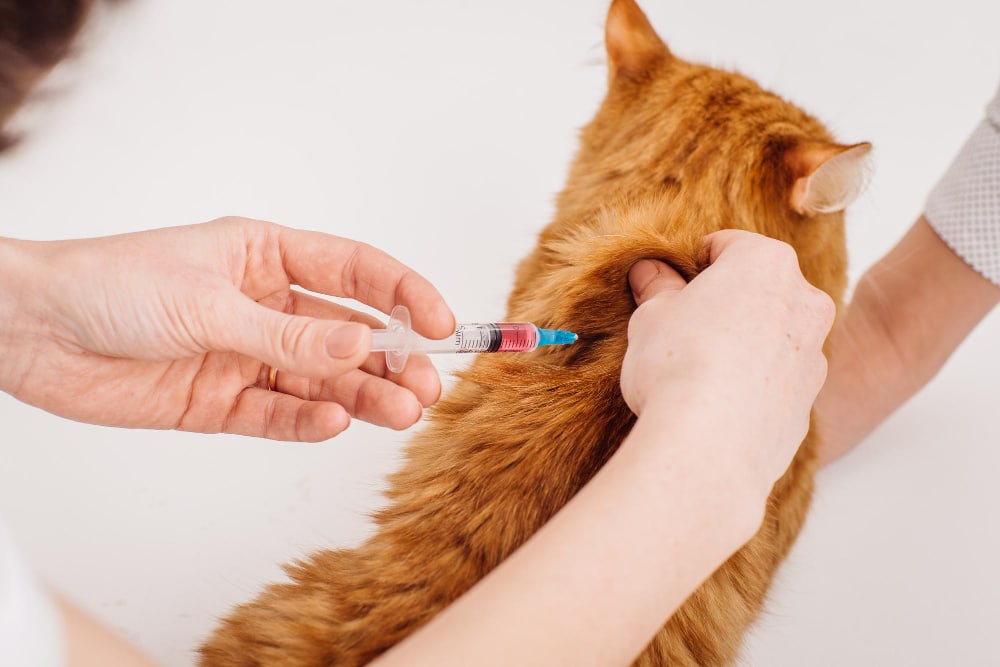
What Diseases Are Covered by Booster Vaccines?
Booster vaccines protect pets from common and potentially fatal diseases by maintaining long-term immunity. These diseases vary by species and are categorised into core (essential) and non-core (optional or situational) vaccines.
Dogs
Distemper
A viral disease attacking the respiratory, gastrointestinal and nervous systems.
- Symptoms: coughing, nasal discharge, seizures, lethargy.
- It can cause long-term neurological issues even after recovery.
Parvovirus
A highly infectious virus, especially dangerous in puppies.
- Causes haemorrhagic diarrhoea, vomiting, and dehydration.
- Spreads via faeces and survives in the environment for months.
Hepatitis (Adenovirus-1)
Also known as canine infectious hepatitis.
- Targets the liver, kidneys, eyes, and blood vessels.
- Spreads through urine, saliva, and faeces; often fatal in puppies.
Leptospirosis
A zoonotic bacterial infection.
- Affects the liver and kidneys; can be fatal without treatment.
- Annual boosters are needed as immunity wanes quickly.
Kennel Cough (Bordetella and Parainfluenza)
A respiratory illness causes a harsh, hacking cough.
- Highly contagious in social environments.
- Recommended annually for dogs in kennels or group settings.
Rabies
A fatal virus affecting the nervous system.
- Not present in the UK, but required for international travel.
- Booster interval: 1–3 years based on product and regulations.
Other
- Canine Influenza: In areas with known outbreaks.
- Coronavirus (CCoV): Less common but available.
- Consult your vet for risk-based recommendations.
Cats
Feline Panleukopenia (Feline Parvovirus)
A severe and often fatal viral infection.
- Attacks the gut lining and the immune system.
- Causes vomiting, diarrhoea, and sudden death in kittens.
Herpesvirus (Cat Flu)
Feline herpesvirus type-1 (FHV-1) causes upper respiratory disease.
- Leads to sneezing, eye ulcers, and nasal discharge.
- Lifelong carrier status is common after infection.
Calicivirus (Cat Flu)
Another key virus in the cat flu complex.
- Causes oral ulcers, fever, pneumonia, and joint pain.
- Spreads through saliva and nasal secretions.
Feline Leukaemia Virus (FeLV)
A retrovirus that suppresses the immune system.
- Increases the risk of infections, anaemia, and cancers.
- Advised for outdoor cats and multi-cat households.
Rabies
Mandatory for cats travelling abroad.
- Booster every 3 years if travelling under the PETS scheme.
- Not routinely given to UK-only cats.
Other
- Chlamydia felis: May be advised in multi-cat homes.
- Bordetella bronchiseptica: Used in catteries or at-risk settings.
- Your vet may recommend additional vaccines based on risk.
What Happens If My Pet Misses a Booster Vaccination?
A missed booster doesn’t always mean immediate vulnerability, but immunity weakens over time. Most pets retain partial protection for a short window, typically 2–3 months after the due date. After this, the risk of infection increases, especially for diseases like leptospirosis or parvovirus, which can spread rapidly and cause severe illness.
In many cases, your vet can administer a single booster if the delay is minor. However, if the lapse is significant, usually over 6 months, restarting the full primary vaccination course may be necessary to rebuild your pet’s immune defences. Quick action is key. Contacting your vet promptly helps assess the risk and determine whether your pet still has sufficient immunity or needs a restart. This ensures your pet remains protected without unnecessary treatment.
Why Booster Timing Matters
- Limited Protection: Most vaccines offer a buffer of 2–3 months after the due date. During this period, immunity may still be present, but it steadily declines.
- Risk of Disease: As antibody levels fall, your pet becomes more susceptible to serious infections such as parvovirus, leptospirosis, or feline panleukopenia.
What If It’s Already Overdue?
- Mild delay (under 3 months): One booster may suffice to renew protection.
- Moderate delay (3–6 months): Some vaccines (like DHP for dogs) allow a single off-license booster within this window.
- Severe delay (over 6 months): Restarting the course is often required to rebuild immunity, this involves two injections spaced 2–4 weeks apart.
Vaccine-Specific Considerations
| Vaccine Type | Grace Period | Action If Overdue |
|---|---|---|
| DHP (Dogs) | Up to 6 months (off-license) | Single booster may be valid |
| Leptospirosis (Dogs) | Short-lived protection | Restarting the course often required |
| FHV/FCV/FPV (Cats) | 3–6 months (varies) | Vet may advise restart or titre testing |
| Rabies (For Travel) | 3-year cycles (varies) | Restarting the course may be needed |
What About Titre Testing?
- Available for dogs only: Measures antibody levels for distemper, parvovirus, and hepatitis.
- Does not replace boosters fully: Not applicable to leptospirosis or rabies.
- Helpful for low-risk pets: Especially where owners are concerned about over-vaccination.
Importance of Vaccination
- Disease prevention: Vaccinations protect against severe illnesses that are still present in the UK pet population.
- Community health: Keeping your pet vaccinated helps prevent outbreaks and protects other animals.
- Annual check-up bonus: Booster appointments include a comprehensive health check.
Consult with Your Vet
- Speak promptly: If your pet has missed a booster, consult with your vet as soon as possible.
- Bring documentation: Your vet will use vaccination records to determine if immunity is likely to have lapsed.
- Tailored advice: Your vet will recommend whether a single booster or a full restart is needed, based on disease type and time elapsed.
Speak to ASL Vets if your pet is overdue. Their team will help restore protection efficiently and safely, with no unnecessary treatments, just tailored veterinary advice.
Are Booster Vaccinations Safe for Pets?
Yes, booster vaccinations are considered safe and essential for disease prevention in pets. In the UK, all veterinary vaccines are regulated by the Veterinary Medicines Directorate (VMD) and must meet strict safety and efficacy standards before approval.
Elaboration
Why Booster Vaccinations?
Booster vaccines help sustain immunity developed from initial puppy or kitten vaccines. Over time, antibody levels decline. Boosters remind the immune system to stay alert against specific pathogens. This is crucial in preventing re-exposure to diseases such as parvovirus, distemper, or panleukopenia.
Safety Measures
Modern vaccines go through stringent safety testing before licensing. The VMD oversees vaccine regulation in the UK. Only formulations proven to be both safe and effective are used in veterinary practice. Surveillance systems continuously monitor for adverse effects.
Common Side Effects
Mild effects occur in a small number of pets and typically resolve within 1–2 days:
- Slight swelling at the injection site
- Temporary lethargy
- Reduced appetite
- Mild fever
- Sneezing (intranasal vaccines)
These signs are manageable at home and rarely need intervention.
Importance of Booster Shots
Booster injections maintain immunity, reducing the risk of severe illness. Diseases like leptospirosis and feline leukaemia can be fatal if unprotected. Regular boosters also contribute to herd immunity, especially in multi-pet environments or during outbreaks.
Veterinary Advice
Vets tailor booster schedules to each pet’s risk factors, lifestyle, and age. Some boosters are given annually (e.g. leptospirosis), others triennially (e.g. parvovirus). Your vet may advise titre testing in certain situations to assess immunity levels. Always consult your vet if you have concerns about vaccine timing or safety.
What Should You Monitor After Vaccination?
It’s important to observe your pet closely for the first 24–48 hours:
- Is there swelling or soreness at the injection site?
- Are they eating, drinking, and behaving normally?
- Are there any unusual symptoms (vomiting, coughing, rash)?
If symptoms persist or worsen, contact your vet immediately.
Key Safety Facts at a Glance
| Safety Aspect | Details |
|---|---|
| Regulating Body | Veterinary Medicines Directorate (UK) |
| Common Reactions | Lethargy, swelling, mild fever |
| Serious Reactions | Extremely rare (<0.03%), treatable |
| Monitoring Period | First 24–48 hours after vaccination |
| Risk if Unvaccinated | Higher exposure to fatal infectious diseases |
Booster vaccines are low-risk and essential for long-term health. The next section explains how your vet determines which vaccines your pet actually needs.

FAQs about Booster Vaccinations
Are booster vaccines necessary for dogs?
Yes, booster vaccines are essential to maintain immunity and protect dogs from diseases.
How much do vets charge for booster injections?
Booster shots typically cost between £30 and £60, depending on the vaccine and clinic.
How often should a dog get a booster shot?
Dogs generally need a booster every 1–3 years, depending on the vaccine used.
What happens if I miss my dog's booster?
Missing a booster can reduce your dog’s immunity, potentially leaving them vulnerable to infections. You may need to restart the vaccination schedule.
What are the side effects of the booster shot?
Booster shot side effects in dogs are usually mild and can include swelling at the injection site, mild fever, lethargy, or loss of appetite. Serious reactions are rare but should be reported to a vet immediately.