

Microchipping is a legal requirement in the UK for all dogs and, from June 2024, for cats too. It ensures permanent identification, increasing the chances of reuniting lost pets with their owners. For international travel, it’s also mandatory, as microchips link pets to official travel documents like animal health certificates. Without a registered and up-to-date chip, your pet may be denied entry at borders. A valid microchip also supports vet travel prep services and documentation validation.
Travelling can be stressful for pets, especially without the right planning. Ensuring your pet is healthy, microchipped, crate-trained, and properly documented reduces risks during transport. Preparation includes acclimatising pets to their travel crates, arranging rabies vaccinations, and gathering health certificates. Meeting vaccination rules for pet travel helps avoid quarantine or denied entry. Whether flying or driving, well-prepared pets are safer, more comfortable, and better protected during international journeys.
This guide explains essential pet travel requirements: microchipping, rabies vaccination, tapeworm treatment, and pet passports. It includes crate training tips, documentation timelines, and how to check or update microchip data. You’ll also learn about Pet travel insurance UK options to protect against unexpected delays or health issues abroad. With clear legal guidance and practical advice, this guide supports pet owners through every step of safe and legal travel with their pets.
Table of Contents
What Are the UK Microchipping Laws for Pets?
Under the Microchipping of Dogs Regulations 2015, it is a legal requirement for all dogs in the UK to be microchipped by the age of eight weeks. For cats in England, new laws require microchipping by 20 weeks of age as of 10 June 2024. Owners must also register their contact details on an approved database and keep them up to date. These legal microchipping rules for dogs and cats aim to improve traceability and pet welfare.
DEFRA oversees microchipping legislation and ensures enforcement via local authorities, dog wardens, and trading standards. Pet owners found non-compliant may receive a notice giving them 21 days to correct the issue. If they fail to comply, a fixed penalty fine of up to £500 can be issued. Enforcement focuses on compliance rather than punishment, with DEFRA supporting public awareness campaigns and providing guidance to help owners meet their legal responsibilities.
The law currently mandates microchipping for dogs across England, Scotland, Wales, and Northern Ireland. From June 2024, it also includes cats in England. Dogs must be microchipped by eight weeks, and cats by 20 weeks. Exemptions exist for working farm dogs or animals with health conditions preventing microchipping. Other pets, like rabbits or horses, are not legally required to be chipped but can be microchipped voluntarily for security and travel purposes.
Dog microchipping has been mandatory since 6 April 2016. For cats in England, enforcement starts on 10 June 2024. If an unchipped pet is identified, the keeper has 21 days to comply. Failure to do so results in fines of up to £500. Owners must also ensure contact details on the database remain current to avoid penalties. Keeping registration details accurate ensures compliance and enhances the effectiveness of microchipping as an identification method.
What Are the Rules for Pet Travel from the UK?
The Pet Travel Scheme (PETS) allows dogs, cats, and ferrets to travel between the UK and other countries without quarantine, as long as certain health requirements are met. To qualify, pets must be microchipped, vaccinated against rabies, and carry proper documentation. The scheme helps simplify pet movement across borders while maintaining biosecurity. It also outlines entry points, limits on the number of pets, and approved carriers, key components of pet travel rules UK compliance.
Since leaving the EU, Great Britain is no longer part of the EU Pet Passport scheme. UK-issued pet passports are no longer valid for travel to EU countries. Instead, UK pet owners now need an Animal Health Certificate (AHC) issued within 10 days before travel. Each trip to the EU or Northern Ireland requires a new certificate. These changes have added more paperwork and timelines, so owners must plan well in advance of travel.
An AHC is mandatory for pets travelling from Great Britain to the EU or Northern Ireland. It must be issued by an Official Veterinarian (OV) no more than 10 days before travel and is valid for 4 months within the EU. It includes details about the pet’s identity, microchip, rabies vaccination, and tapeworm treatment if applicable. Each trip requires a new AHC. Without one, pets may face border delays, denial of entry, or quarantine.
Pets must be microchipped before receiving their rabies vaccination, which is only valid from 21 days after administration. Dogs travelling to certain countries like Finland, Ireland, Malta, and Norway also require tapeworm treatment 24-120 hours before arrival. This must be administered by a vet and documented in the AHC or valid EU pet passport. Failure to meet these health requirements can result in denied entry or mandatory quarantine at the destination border.
How to Keep Pets Safe in Travel Crates or Carriers?
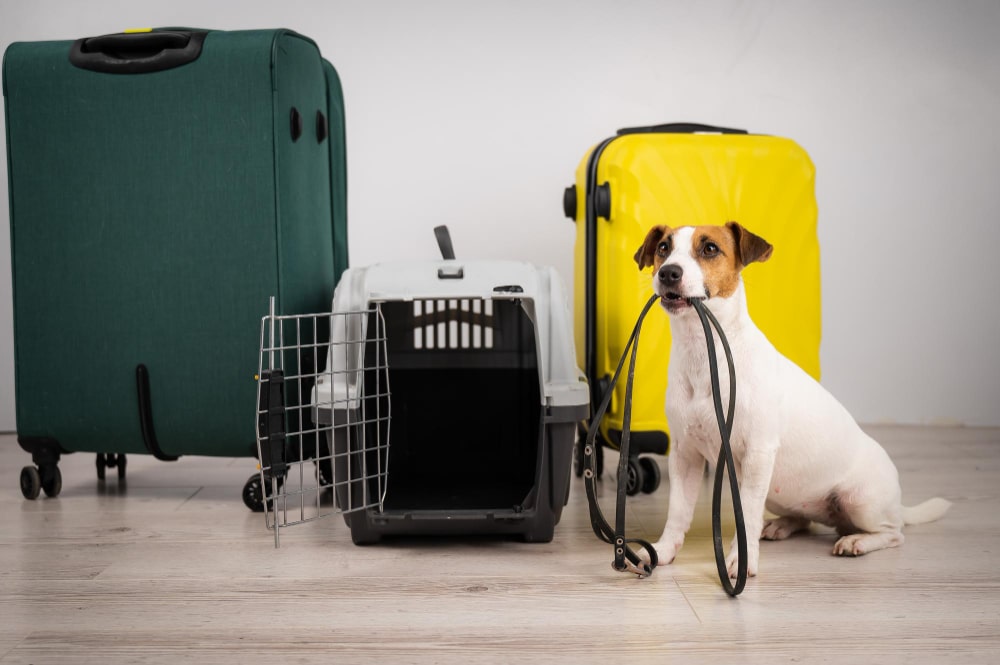
Choosing the right crate size is vital for pet safety. Your pet must be able to stand, turn, and lie down comfortably. Airline-approved safe travel crates for pets typically follow IATA standards, offering sturdy construction, secure latches, and ventilation on three sides. For air travel, label the crate with your contact details and ensure it’s well-ventilated to prevent overheating. Soft-sided carriers are suitable for small pets on short trips, but not recommended for long-distance or air travel.
To ease anxiety, introduce the crate gradually. Place it in a familiar room with the door open and encourage exploration using treats, toys, or a favourite blanket. For cats, remove the door initially and allow them to enter freely. Build positive associations by feeding near or inside the crate. Extend time spent inside slowly. For travel readiness, close the door for short periods and reward calm behaviour. This step-by-step approach makes the crate feel like a safe space.
In the UK, pets must be suitably restrained in vehicles under the Highway Code to avoid distraction and ensure safety during travel. Acceptable restraints include crates, pet seat belts, or carriers secured with a seat belt. An unsecured animal could cause accidents or injury in a sudden stop. Placing the carrier on a flat surface and securing it with the vehicle’s seatbelt ensures compliance with the law and provides physical stability for your pet.
Line the crate with soft, washable bedding and include familiar items like a favourite toy or blanket. Offer water, and if the journey is long, small portions of dry food in spill-proof containers. Use calming sprays such as Feliway for cats before travel. Covering the crate with a blanket can reduce external stimuli and anxiety. Travel during quiet hours, avoid loud noises or sudden stops, and speak gently to your pet to help maintain a calm atmosphere.
How to Update or Register Pet Microchip Details?
You should update your pet’s microchip information any time your contact details change, such as moving house, changing phone number, or transferring pet ownership. Outdated records can prevent reunification if your pet is found. To change address in pet microchip database, contact your microchip provider immediately. Even a small error can delay recovery in emergencies. Keeping records current is not just practical, it’s a legal requirement under UK microchipping regulations for dogs and now cats in England too.
In the UK, several government-compliant databases manage pet microchip records. The most widely used include Petlog, Animal Tracker, and Identibase. Others like Chipworks, SmartTrace, and PETtrac are also approved. Each database maintains contact information linked to a unique microchip number. If you’re unsure which database holds your pet’s data, use a lookup service such as Check-a-Chip. You’ll need your pet’s microchip number, which can be found on paperwork or by scanning at a vet clinic.
To update your pet’s microchip, first find the microchip number, either from registration documents or by scanning at your vet. Identify the database using Check-a-Chip or microchip brand information. Visit the database’s website or call them to log in or create an account. Follow their process to amend your details. Some may require proof of ID or a small fee. Ensure all fields are completed accurately to prevent issues in case your pet goes missing.
When a lost pet is found, vets, shelters, or wardens scan the microchip to retrieve the ID number. This number is cross-checked with a database to access the registered contact information. If those details are correct, the pet can be quickly reunited with its owner. Microchipping greatly improves the chance of recovery, particularly when tags or collars go missing. It’s a vital tool in responsible pet ownership, offering permanent, reliable identification for a pet’s lifetime.

FAQs About Pet Travel & Microchipping
What is the pet travel scheme in the UK?
The Pet Travel Scheme (PETS) allows dogs, cats, and ferrets to travel without quarantine if they meet health and documentation requirements.
How much is a pet travel certificate UK?
An Animal Health Certificate typically costs between £100 and £150, depending on the vet and location.
Is it a legal requirement to microchip a dog in the UK?
Yes, all dogs must be microchipped and registered by eight weeks of age.
How much does it cost to transport a pet in UK?
Transporting a pet within the UK can cost £100–£300, depending on distance, carrier, and method.